
Freeya
Freeya StudiosShopping
3.678.00 Reviews
- Version
- 1.9.0.167
- Installs
- 50.00K
- Age Rating
- Teen
Screenshots

Our Review of Freeya
 Analysis by Appyee
If you’re trying Freeya for the first time, I’d go in with a simple goal: either find one useful nearby item or list one thing you’re ready to pass on. That gives the app a clearer purpose than browsing indefinitely. It’s a shopping app from Freeya Studios, but the appeal is less about buying and more about matching local people with things they can reuse.
Start with a small, practical goal
Before opening the feed, think about what would genuinely help: a kitchen item, a book, or something for a room you’re setting up. A specific need makes it easier to judge whether a listing is worth following up on, especially when the feed includes a mix of different kinds of items. I’d also decide how far I’m willing to travel before I get attached to a listing; “nearby” is only useful if the pickup works with your day.
Freeya is free to install, and its Teen content rating gives a first-time user a quick sense of the intended audience. The app is on version 1.9.0.167, and it has passed 50,000 installs, with a 3.6 average rating from 251 ratings. Those figures suggest an established but still relatively modest community, so the experience may depend a lot on how active local users are. In-app purchases are listed from $0.99 to $19.99 per item, so I’d check the app’s purchase prompts carefully rather than assuming every optional element is free.
Make your first browse useful
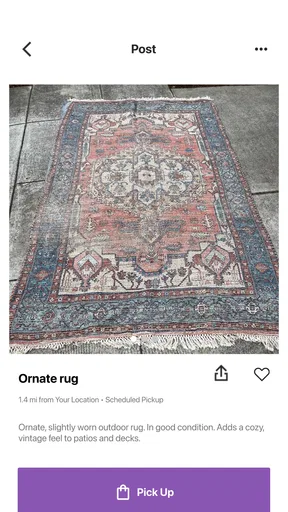
When I look through a local giveaway feed, I treat each listing as a conversation that may need a little coordination, not as a guaranteed checkout. Check the item details before contacting the giver, and ask one clear question at a time if something important is unclear. For example, if a chair looks suitable, confirm the pickup arrangement and whether its condition matches what you need before planning around it.
A good first success does not have to be a valuable object. It could be finding a book you’ll actually read or arranging a pickup for something that would otherwise have gone unused. Keeping the first exchange modest makes it easier to learn how browsing, messaging, and collection fit together without turning a free item into a stressful errand.
Who gets the most from it
I can see Freeya working best for people who have some flexibility: someone furnishing a room gradually, a parent looking for reusable household bits, or a neighbor who wants to clear out items that are still useful. It is also a natural fit if you enjoy local exchanges and don’t mind messaging another person to arrange a handoff. The community element matters because the app is not simply a shelf of products; each useful result depends on a giver and a recipient agreeing on the details.
If you need a particular item by a particular time, a conventional shop or a well-stocked resale marketplace may be the more reliable choice. Freeya’s value is the chance to find something at no purchase price, not certainty that a specific item will appear when you need it. I’d use it for flexible wants and household discovery, rather than making it the only plan for an urgent essential.
Discovering Deals with Ease
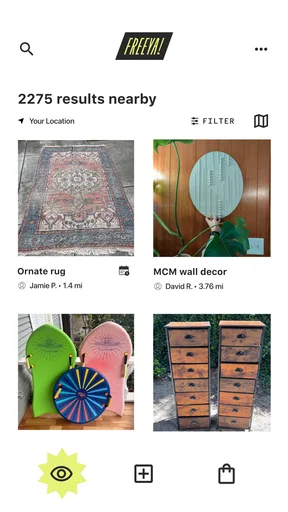
Right off the bat, Freeya makes it super simple to find free things around you. The app’s interface is pretty intuitive, which means you won't find yourself lost in a sea of buttons and options. Once you open it up, you’re greeted with a feed of available items, and they’re all free! From clothes to gadgets, you name it, someone’s giving it away.
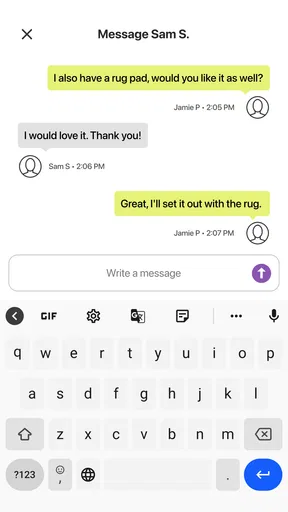
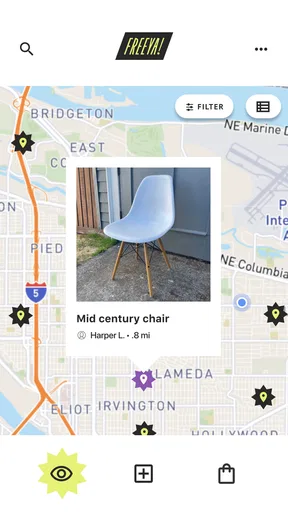
The app uses your location to show nearby freebies, which is a smart move. I found a couple of cool things just a few blocks away from my place. The map feature is pretty handy here, showing you exactly where you can pick up your new treasures. Just tap on an item, check the details, and if it’s something you’re interested in, you can contact the giver directly through the app.
Community Vibes
One of the things that stood out to me about Freeya is the sense of community. It’s not just about getting free stuff; it’s about connecting with people in your area. Users can leave comments and even rate their exchange experiences, which adds a level of trust and reliability. It’s like a friendly neighborhood swap meet, but in the palm of your hand.
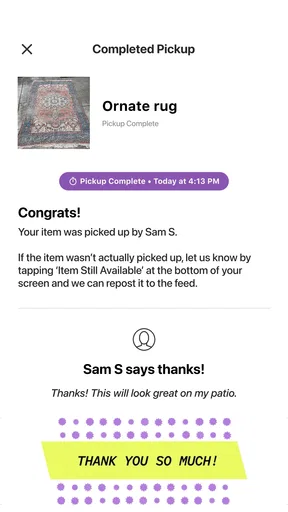
It's also worth mentioning the "thank you" feature. After you’ve picked up an item, you can send a quick note of thanks to the person who gave it to you. It’s a nice touch that encourages a positive community vibe.
User Experience and Design
The design of Freeya is pretty clean and straightforward. It’s not cluttered or overwhelming, which I appreciate. The colors are easy on the eyes, and the layout is logical. You’ve got your main feed, a map view, and a profile section where you can manage your listings and messages. Simple and effective.
Navigation is smooth, and I didn’t encounter any bugs or crashes during my time with the app. It’s always refreshing when an app works as it should without any hiccups.
Why You’ll Love It
If you love the thrill of finding a bargain or recycling and reusing items, Freeya is going to be your new best friend. Not only do you get to save some cash, but you’re also helping to reduce waste by giving items a second life. Plus, who doesn’t love a good freebie?
Another cool aspect is the variety. On any given day, you can find everything from books and clothes to furniture and electronics. It’s like a treasure hunt every time you open the app.
Room for Improvement
While Freeya is pretty awesome, there are a couple of things that could make it even better. For starters, it would be nice to see a bit more in the way of item categories or filters. Right now, you kind of have to scroll through everything, which can be a bit tedious if you’re looking for something specific.
Also, the chat function could use a little tweaking. Sometimes messages take a bit longer to send, and a notification system for when someone responds would be helpful. But hey, these are small potatoes in the grand scheme of things.
A smoother first handoff
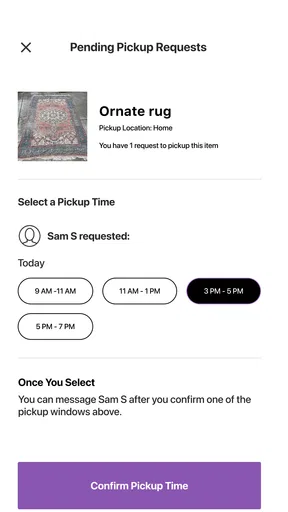
For a realistic first outing, I’d choose an item that is easy to carry and not time-sensitive. Imagine noticing a small household object while waiting for a bus: I’d open its details, check the map, and message the giver with a brief note asking whether it is still available and what pickup time suits them. If the timing does not line up, I’d move on rather than rearrange my whole day. That small boundary is useful: a free item is only a good find when collecting it is practical.
For anything bulky, I’d plan the transport before agreeing to collect it. A piece of furniture can be a real bargain in money but a poor fit if I have no way to move it or cannot reach the pickup location comfortably. The map helps me assess distance, but it does not remove the need to coordinate directly. I would treat the handoff as an ordinary arrangement with another person: be clear, courteous, and realistic about when I can arrive.
Giving something away takes thought, too
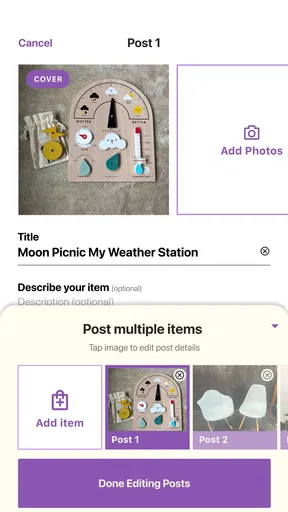
Freeya is not only for browsing. If I were clearing a shelf or making space before a move, I’d select an item that is still usable, describe its condition plainly, and make the pickup expectations clear in the listing or messages. Specific, honest details help avoid a mismatch: a recipient can decide whether an item is right for them, and I am less likely to spend time answering questions that a clear description could have covered.
I’d also avoid listing several things in a rush if I could not keep track of replies. Each promised item creates a small coordination task. Keeping a note of who I have contacted and which handoff I have agreed to can prevent crossed wires, particularly when more than one person is interested. That is a simple habit rather than a special app tool, but it makes a community exchange feel more dependable on both sides.
How it differs from shopping and resale apps
Compared with a regular retail app, Freeya trades certainty and convenience for the possibility of a free local find. A shop is better when I need a precise model, a predictable delivery, or a clear purchase process. Compared with resale marketplaces, Freeya is oriented around items being offered without a purchase price, so there is less emphasis on negotiating a sale and more on arranging a suitable pickup. In either case, the alternatives can be preferable when condition, timing, or selection matters more than avoiding a purchase.
The trade-off is that local supply can be uneven. A broad feed may be fun to explore, but it is not the same as a searchable catalogue with a guaranteed stock level. Since I found the range of filters limited, I’d use the map and a focused browsing session rather than repeatedly scrolling with no particular aim. If there is nothing useful nearby today, that is a reason to check another time, not a reason to assume the app has failed.
Keep expectations and coordination balanced
The comments and exchange ratings can offer helpful context, but I would read them as signals rather than guarantees. A positive history cannot tell me whether a particular pickup will suit my schedule, and a quiet profile does not automatically make a listing unsuitable. I still need to look at the item itself, ask practical questions, and decide whether the arrangement feels comfortable. This is where Freeya’s community angle is useful, while also reminding me that local exchanges involve a little more judgment than tapping “buy” in a store.
Messaging is another point where patience helps. Since replies and notifications may not feel as immediate as a standard checkout confirmation, I would not make a tight plan around an unanswered message. Send a concise inquiry, allow time for the giver to respond, and keep another option in mind. That approach is especially helpful for an item that is popular or convenient to collect; it stops an uncertain conversation from taking over the day.
Who should look elsewhere
I would skip Freeya as my main solution if I needed a specific item urgently, wanted delivery, or had no flexibility about pickup. It may also be frustrating for someone who dislikes arranging plans with other people or who expects every listing to come with the predictability of a shop. For those situations, a retailer or a resale service with a more defined purchase and delivery process is likely the better fit.
On the other hand, people who are happy to browse locally, reuse everyday goods, and coordinate a simple handoff are more likely to find the experience worthwhile. I see the strongest use case as gradual discovery: check when it suits you, follow up only on items that fit your needs, and give usable belongings a second home when you are ready to pass them on. That keeps the app helpful without making free listings feel like obligations.
What I would do next
After a first successful exchange, I’d send the thank-you note and consider leaving a fair rating or comment about how the handoff went. Those small actions give future users more context and help make the community more useful. If the first browse did not turn up anything, I would adjust my expectations and try again when I have time, rather than treating an empty search as a promise that the right item will appear immediately.
Freeya is most convincing when I use it as a neighborly way to circulate useful things, not as a replacement for every kind of shopping. The free price can be appealing, and the local feed, map, profile, and direct contact give the exchange a practical shape. Its limits are real: selection depends on nearby activity, filters could make targeted browsing easier, and messaging still requires patience. For a flexible user with a little time to coordinate, though, a small first find can make the whole idea click.
Overall, Freeya is a delightful app that brings people together over free stuff. It’s functional, fun, and a great way to connect with others while scoring some cool items. Whether you’re a seasoned bargain hunter or just looking to declutter your space, give Freeya a spin. You might just find something you didn’t even know you needed.
Verdict
Strengths of Freeya
- User-friendly interface, easy to navigate.
- Wide variety of categories to explore.
- Efficient search feature saves time.
- Regular updates with new content.
- Seamless integration with social media.
Limitations of Freeya
- Occasional crashes on older devices.
- Limited offline functionality.
- Some features require in-app purchases.
- Advertisements can be intrusive.
- Longer load times during peak hours.
Similar Picks in This Category
View All
SHEIN-Shopping Online
Roadget Business PTE. LTD.4.8

Amazon Shopping
Amazon Mobile LLC4.4


Mercado Libre: Compras online
Mercado Libre4.8

Wish: Shop and Save
Wish US Holdings LLC4.7

Alibaba.com - B2B marketplace
Alibaba Mobile4.4
Frequently Asked Questions
What is Freeya and how does it work?
Freeya is a community-driven marketplace app that allows users to give away and receive items for free. Users can list items they no longer need and browse through available listings. The app facilitates an exchange without monetary transactions, promoting sustainability and community sharing.
Is Freeya available on both Android and iOS?
Yes, Freeya is available for download on both Android and iOS platforms. You can find the app on the Google Play Store for Android devices and the Apple App Store for iOS devices, making it accessible to a wide range of users.
Are there any hidden costs associated with using Freeya?
Freeya is designed to be a completely free platform with no hidden costs. The app does not charge users for listing or receiving items, and there are no subscription fees. However, users should be aware of potential transportation costs if they choose to pick up items.
How does Freeya ensure the safety and quality of listed items?
Freeya encourages users to provide honest descriptions and photos of their items. While the app does not directly verify each listing, it relies on user feedback and ratings to maintain quality. Users are advised to communicate and confirm details before meeting up to ensure safety and satisfaction.
Can I use Freeya outside my local area?
Freeya is primarily designed for local exchanges to minimize transportation and promote community interaction. While you can browse listings in other areas, it’s recommended to focus on your local community to make pickups and exchanges more convenient and environmentally friendly.
